

Boarding Up for Residential, Commercial & Vacant Properties in Maidstone (ME Postcodes)
If you’re searching for boarding up in Maidstone, there’s a good chance it’s because something has already gone wrong—broken glass, a forced door, storm damage, or an empty building that suddenly feels like a risk. The right solution depends heavily on the type of property and where the weak points are.
We secure homes, shops, offices and vacant buildings across Maidstone and the wider ME postcode area (ME1–ME20). From Victorian terraces around Maidstone East and the riverside flats near the Medway, to shopfronts in the town centre and industrial units around Parkwood and the M20 corridor, we tailor the materials and fixings to the building and the situation.
If you need urgent help, use our emergency page: emergency boarding up. For non-urgent work, we can quote and plan a secure, tidy installation that keeps you compliant with insurers and reduces the chance of repeat damage.
Why property type matters with boarding up
Boarding isn’t “one size fits all”. The right approach depends on:
- Risk level and visibility (e.g., a ground-floor shopfront on a busy street vs a rear window on a quiet estate)
- The opening (glass size, frame condition, door type, whether there’s glazing nearby)
- How long it needs securing for (overnight vs weeks/months)
- Access and safety (upper floors, shared entrances, rooflights, public footpaths)
- Your documentation needs (insurers, landlords, facilities managers)
Where possible, we aim for secure, non-destructive fixing methods. If frames are too damaged to take fixings safely, we’ll explain your options before proceeding.
Residential boarding up (houses, flats & maisonettes)
Residential call-outs are often stressful—especially after a break-in or an accidental impact. In Maidstone you’ll see a real mix: older terraces and period properties closer to town, 1930s semis in established neighbourhoods, plus newer estates and apartment blocks around key commuter routes.
Common residential scenarios we secure
- Smashed windows after burglary or vandalism
- Forced doors and split frames
- Storm damage where panes have popped or frames are left loose
- Fire brigade access where doors/windows have been removed for safety
If the event is the main issue you’re dealing with, you may find these guides useful:
How we typically board up homes
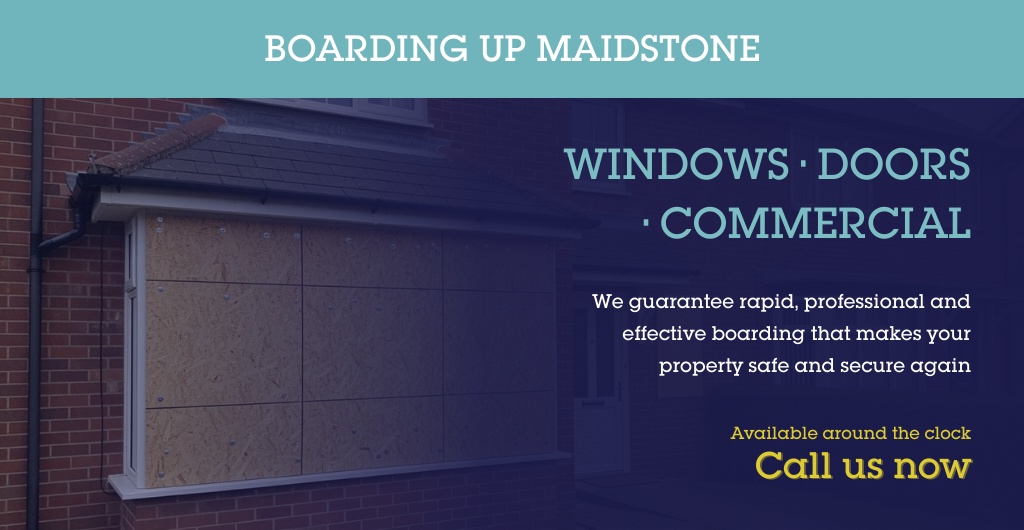
For most domestic windows and smaller openings we’ll use exterior-grade plywood (often 18mm where appropriate) or OSB (commonly 12mm for smaller areas), cut to fit and fixed using methods designed to resist removal from outside. We choose fixings based on the frame material and condition (timber, uPVC, masonry surround), and we’ll always aim to keep the property as weather-tight as practicable.
When a door is compromised, boarding alone isn’t always the best answer. In many cases, a stronger and more practical option is a temporary door solution:
What homeowners and tenants usually need from us
- Clear explanation of what we’re doing and why
- A secure install that reduces the chance of repeat entry
- Photos of the secured area (useful for insurers/landlords)
- Itemised invoices and a short work statement you can pass on
We’re not loss adjusters or legal advisers, but we can provide the kind of documentation insurers typically ask for. More guidance here: insurance claims support.
Commercial boarding up (shops, offices, restaurants & industrial units)
Commercial properties have different pressures: trading hours, public safety, and the need to secure entrances without creating further hazards. In central Maidstone this often means shopfront glazing, while business parks and mixed-use areas may involve roller shutters, personnel doors, side windows, and service yard access points.
Where commercial boarding is commonly needed
- Retail units and shopfronts after impact or vandalism
- Offices with smashed ground-floor glazing
- Warehouses/industrial units where side doors have been forced
- Restaurants and cafés needing a safe temporary closure overnight
For large panes and street-facing premises, we often recommend purpose-led solutions:
Practical considerations for businesses
- Public-facing safety: sharp glass risk, exposed openings, trip hazards
- Security vs access: you may need staff access even while secured
- Signage and visibility: we keep installs tidy and proportionate
- Documentation: facilities teams and insurers often require photos and method statements
If your premises are temporarily closed, we’ll talk through the best medium-term option so you’re not paying repeatedly for short-term fixes.
Vacant & void property boarding up (between tenants, probate, repossessions)
Empty buildings attract attention—especially if they look obviously unoccupied. In parts of Maidstone and the wider ME area, void properties can become targets for opportunist entry, fly-tipping, or repeated vandalism.
If a property will be unattended, the goal is to make it hard to access and obvious that it’s secured, without causing unnecessary damage to the building fabric.
Typical vacant property situations
- End of tenancy (awaiting refurbishment or new tenants)
- Probate properties
- Repossession/asset management securing
- Unoccupied commercial units needing protection from repeat entry
In these cases, boarding may be a short-term step—but it’s not always the best long-term answer. Depending on risk, we may recommend additional security measures such as steel-based options:
Methods that suit medium-term security
For longer periods, we’ll often discuss options such as temporary steel doors or steel security screens (Sitex-style) where appropriate. These can provide stronger protection and better access management than repeated plywood installs—especially for doors that have already been forced.
If the frame is too damaged to use non-destructive methods, we’ll explain what can be done safely and what might require a follow-on repair by your builder or locksmith.
Choosing the right service for your property
Different openings require different solutions. These pages explain each service in more detail:
- window boarding in Maidstone for broken or vulnerable glazing
- door boarding in Maidstone for forced or unsafe doors
- shopfront boarding for large commercial glazing and street-facing units
- roof boarding for damaged rooflights and overhead openings
If you’re not sure what you need, start with: what is boarding up. If it’s urgent, go straight to: emergency boarding up.
What to expect when you call us
You don’t need to know the technical terms—just tell us what’s happened and what’s exposed.
- Quick triage on the phone: what’s damaged, whether anyone is at risk, and whether police/fire have attended if relevant.
- Advice on immediate safety: what to avoid touching, and whether to stay inside/outside the affected area.
- On-site assessment: we check the frame condition, access, and the best fixing method.
- Secure installation: cut-to-fit boards, suitable fixings, and a tidy finish.
- Documentation: photos and an itemised invoice/work statement where needed.
We don’t promise fixed arrival times—traffic, safe access, and other urgent jobs can affect this—but we prioritise genuinely urgent calls and keep communication straightforward.
Materials & fixings (what we use and why)
We choose materials based on opening size, risk, and duration:
- Exterior-grade plywood: strong, reliable, ideal for most windows/doors and larger openings
- OSB: suitable for smaller, lower-risk openings where appropriate
- Anti-tamper fixings: to reduce the chance of removal from outside—especially important for unattended properties
- Temporary steel doors / security screens: better for medium-term securing and repeated access needs
If you have specific requirements (site rules, facilities management processes, or insurer instructions), tell us when you call so we can plan accordingly.
FAQs (Property Types)
Do you board up flats and apartments in Maidstone?
Yes. Flats often involve shared access, restricted parking, and upper-floor work. We’ll assess the safest route for materials and whether we need your building manager’s permission for communal areas.
Is boarding up covered by insurance for residential and commercial properties?
Often it can be, especially after burglary, vandalism, storm or impact damage—but policies vary. Keep any incident number (police or insurer) and take photos if it’s safe before we arrive. More help: insurance claims support.
Should I board up or install a temporary steel door for a forced entry?
If the door and frame are heavily compromised or the building will be vacant, a temporary steel door is often more secure and practical than repeated boarding. If it’s a one-off incident and the opening can be made safe quickly, door boarding may be appropriate. See: door boarding in Maidstone.
Can landlords or letting agents arrange boarding up between tenancies?
Yes—landlords, agents and property managers regularly instruct us for void periods. If access is via a key safe or managed collection, let us know so we can confirm arrangements before attending. You may also want: vacant property boarding.
What if the window/door frame is too damaged to fix boards safely?
We’ll explain the options on site. In some cases we can still secure using alternative fixing points; in others the frame needs stabilising first. We won’t proceed with an unsafe installation without talking it through.
Property types we cover across the ME postcode area
We work across Maidstone and surrounding ME districts (ME1–ME20), including residential streets, town-centre commercial units and rural properties that need securing after storms or accidents. You can explore local coverage here: areas we cover.
Helpful Links
- emergency boarding up
- window boarding in Maidstone
- door boarding in Maidstone
- shopfront boarding
- insurance claims support
- FAQs
Ready to get started? Call 01622 580 086 or email us for a free, no-obligation quote.
